
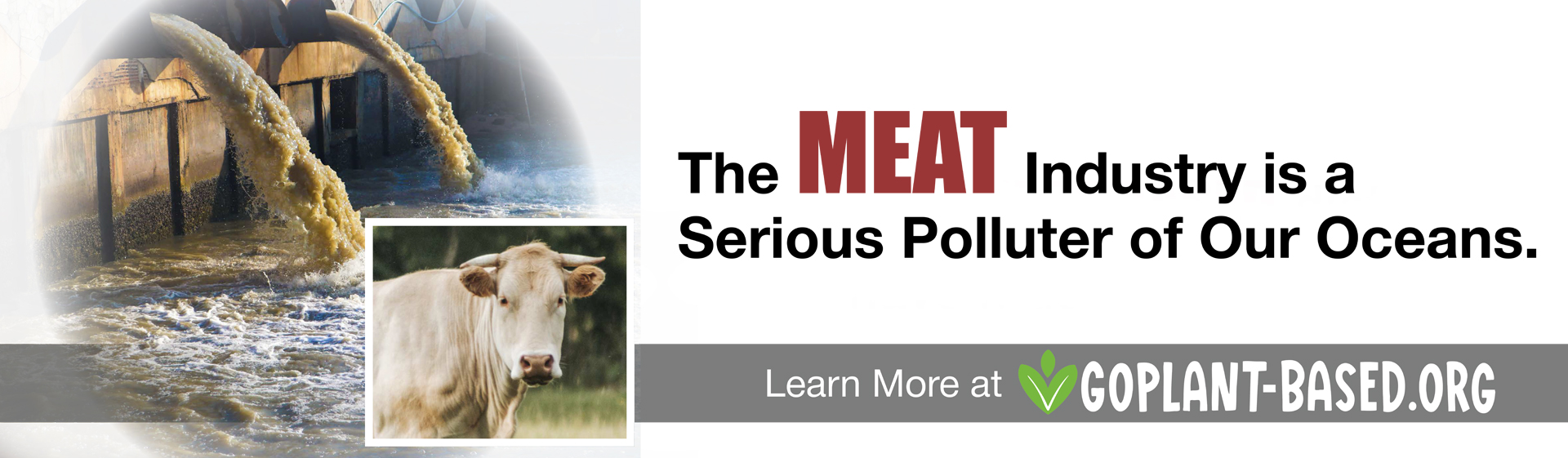
How Animal Agriculture Is Destroying Our Oceans
The Truth Beneath the Surface
On the surface, animal agriculture might seem far removed from what goes on in the ocean. Unfortunately, the laundry list of environmental concerns about factory farms doesn’t stay confined to the land — not even close.
The very practices that supply us with meat, dairy, and fish are actively polluting our waters and collapsing vital ecosystems.
How does animal agriculture affect oceans?
The oceans are the lifeblood of our planet. They play a critical role in regulating the climate, supporting marine biodiversity, and sustaining the global food system.
Animal agriculture requires massive amounts of manure, fertilizers, antibiotics, and hormones. All of this nasty stuff seeps into nearby rivers, lakes, and streams — which eventually makes its way into the ocean.
US farms alone generate around 500 million tons of manure every year. This waste overloads waterways with excess nitrogen and phosphorus, which leads to a deadly process called eutrophication.
“The meat industry is no friend of our oceans.”
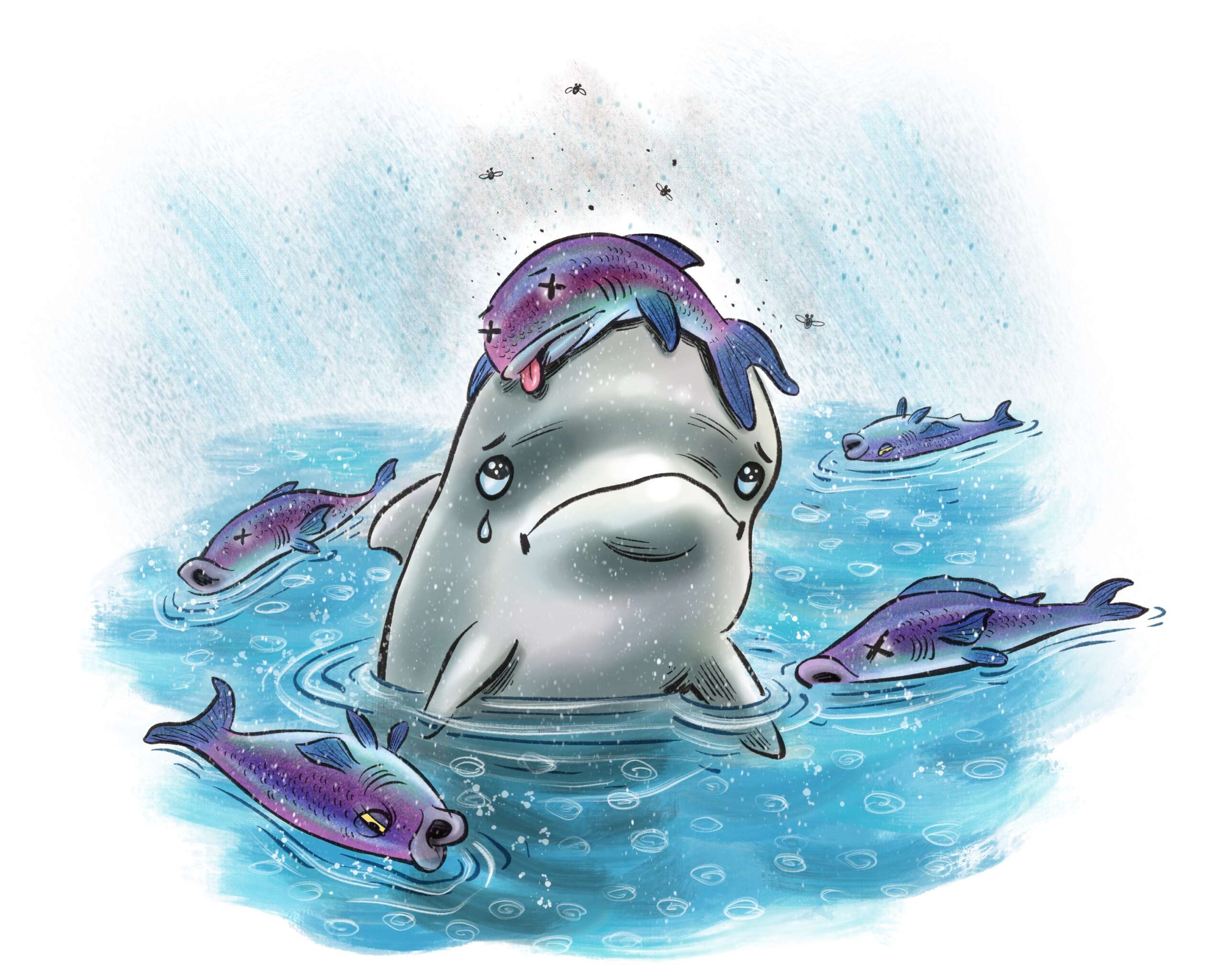
In simple terms, the water becomes choked with algae, which in turn depletes oxygen and creates ocean dead zones. As a result, marine life suffocates until it can no longer survive.
 What most people don’t realize is that animal agriculture is responsible for a shocking 78% of global eutrophication. This harms biodiversity, fishing industries, and coastal communities.
Industrial animal agriculture is also a major contributor of greenhouse gas emissions. As global warming raises the ocean temperature, coral reefs bleach and die, leaving countless species vulnerable and without shelter.
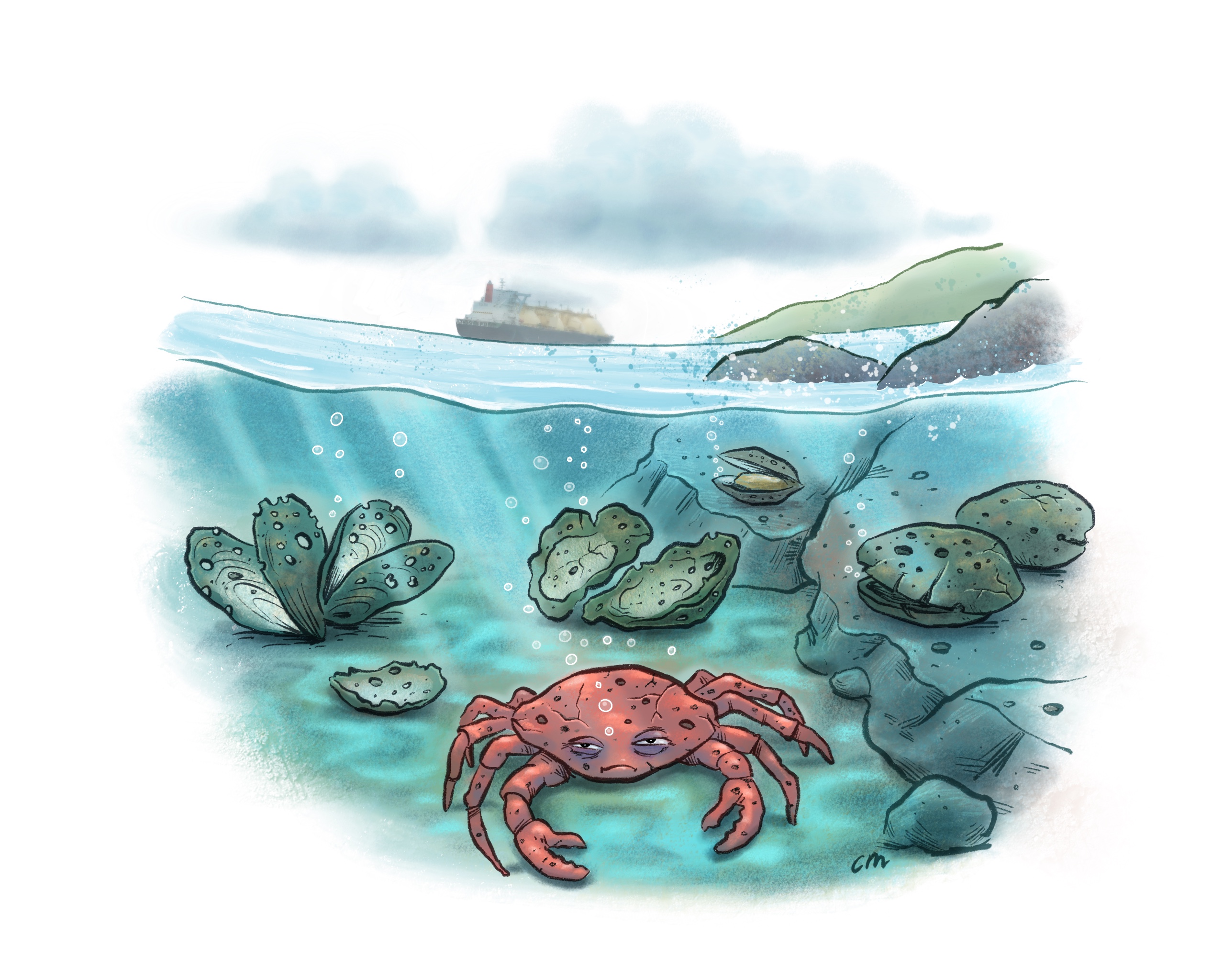
Additionally, the carbon dioxide released from factory farms disrupts marine life by altering the pH balance of ocean waters, known as ocean acidification. This makes it harder for organisms like corals, mollusks, and shellfish to build their shells and skeletons, threatening a crucial part of the marine food chain.
Is fish farming sustainable?
Aquaculture, or intensive fish farming, is another big player in the destruction of the ocean.
Crowded fish farms leak untreated waste, disease, and antibiotics into the surrounding waters. They can also disrupt local ecosystems by introducing non-native species, spreading parasites, and intensifying ocean dead zones.
As the global demand for fish continues to rise, the pressure on ocean resources is mounting. Without proper safeguards in place to protect the surrounding ecosystems, fish farms are unsustainable and damaging to the ocean.
Our freshwater is also in danger
It’s not just oceans that are suffering due to animal agriculture — it’s our entire planet’s freshwater supply.
70% of our global water resources go to agriculture, with nearly a third of that allocated to animal farming. To put this into perspective, producing just one pound of beef requires nearly 2,000 gallons of water — enough to fill 39 bathtubs.
Using water to grow crops for livestock feed, rather than directly feeding humans, is incredibly inefficient and exacerbates water scarcity. This is especially dangerous for people living in drought-prone regions.
Our water resources are finite, and we’re long overdue to rethink how we allocate them.
How does water pollution impact our health?
As if the environmental devastation weren’t enough, water polluted by animal agriculture poses direct risks to human health.
 Harmful pathogens from animal waste, such as E. coli and Cryptosporidium, can enter waterways and eventually contaminate our drinking water and seafood. This is a serious health threat, particularly in coastal areas.
Additionally, runoff from factory farms often carries heavy metals, pesticides, veterinary drugs, and high levels of nitrates to our water. Eating seafood and drinking water exposed to these contaminants can lead to a range of health issues, including birth defects, thyroid disease, liver and lung damage, weakened bones, and cancer.
The best way to take action against water pollution
The health of our oceans and quality of our drinking water is intimately connected with the dietary choices we make every day. Adopting a plant-based diet is one of the simplest and most effective ways to help reduce the environmental toll of animal agriculture on our oceans and water supply.
We can choose to support sustainable farming practices, such as those that prioritize plant-based food production, soil health, and water conservation. Avoiding meat, dairy, and eggs also helps improve our health, combat climate change, and preserve biodiversity for future generations.
It’s understandable to feel like your personal food choices won’t move the needle. But when these small, daily decisions are multiplied by millions, that’s how we drive systemic change — not only in the direct environmental impact, but in the powerful message they send to industries and policymakers. As more people choose plant-based options, businesses will respond by scaling back animal agriculture and investing in sustainable alternatives.