
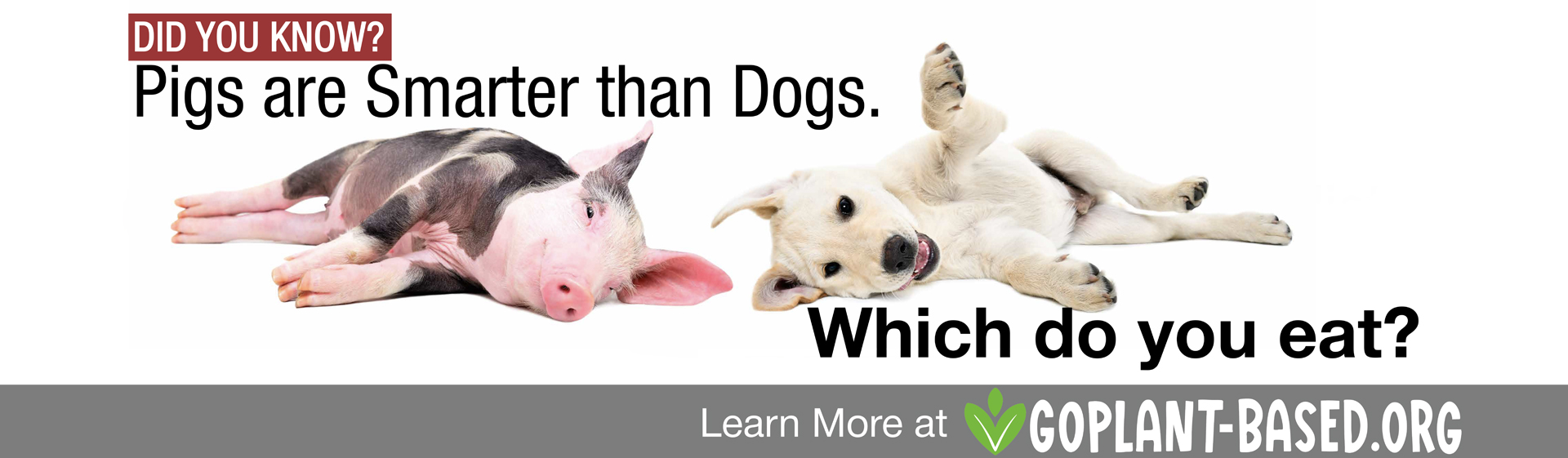
Pigs are smarter than dogs.
Which do you eat?
Don’t worry — we’re not suggesting you eat dogs.
Animal intelligence comes in many forms, and it’s easy to assume that our beloved pets are smarter than the rest. But scientific research reveals a surprising truth that might make that next slice of bacon hard to swallow: Pigs have cognitive capabilities that surpass those of dogs, and even three-year-old children.
Study after study has shown that these misunderstood animals demonstrate remarkable emotional awareness, problem-solving skills, and memory retention. As we take a closer look at pig intelligence and behavior, you may be left wondering why such a social, lovable animal ends up on our plates while dogs do not.
We’re invited to reexamine the stereotypes we associate with pigs, and reflect on the ethical implications of our dietary choices.
What evidence do we have of pig intelligence?
When you think of a pig, what do you picture? A dirty farm animal rolling around in the mud? A lazy creature sleeping in a pen?
A big part of why pig intelligence is so deeply misunderstood is because the harsh, cramped environments we’re used to seeing them in prevent them from expressing their true nature. Even the notion that pigs are “dirty” is misguided; those mud baths are a smart instinct to help them keep cool and avoid sunburn. They naturally keep their eating and sleeping areas clean and keep their waste separate.
“Pigs rank as the fifth-most intelligent non-human animal in the world.”
Nowadays, it’s widely acknowledged that pigs rank as the fifth-most intelligent non-human animal in the world. That puts them in the same company as chimpanzees, bonobos, elephants, crows, parrots, and dogs. Pigs’ emotional depth, social interaction with each other and other species, and ability to learn complex tasks are all evidence of their astounding brains. They can recognize symbols, use tools, play simple video games with their snouts, and solve problems as well as primates. They even outperform dogs when it comes to cognitive tasks and navigating mazes.
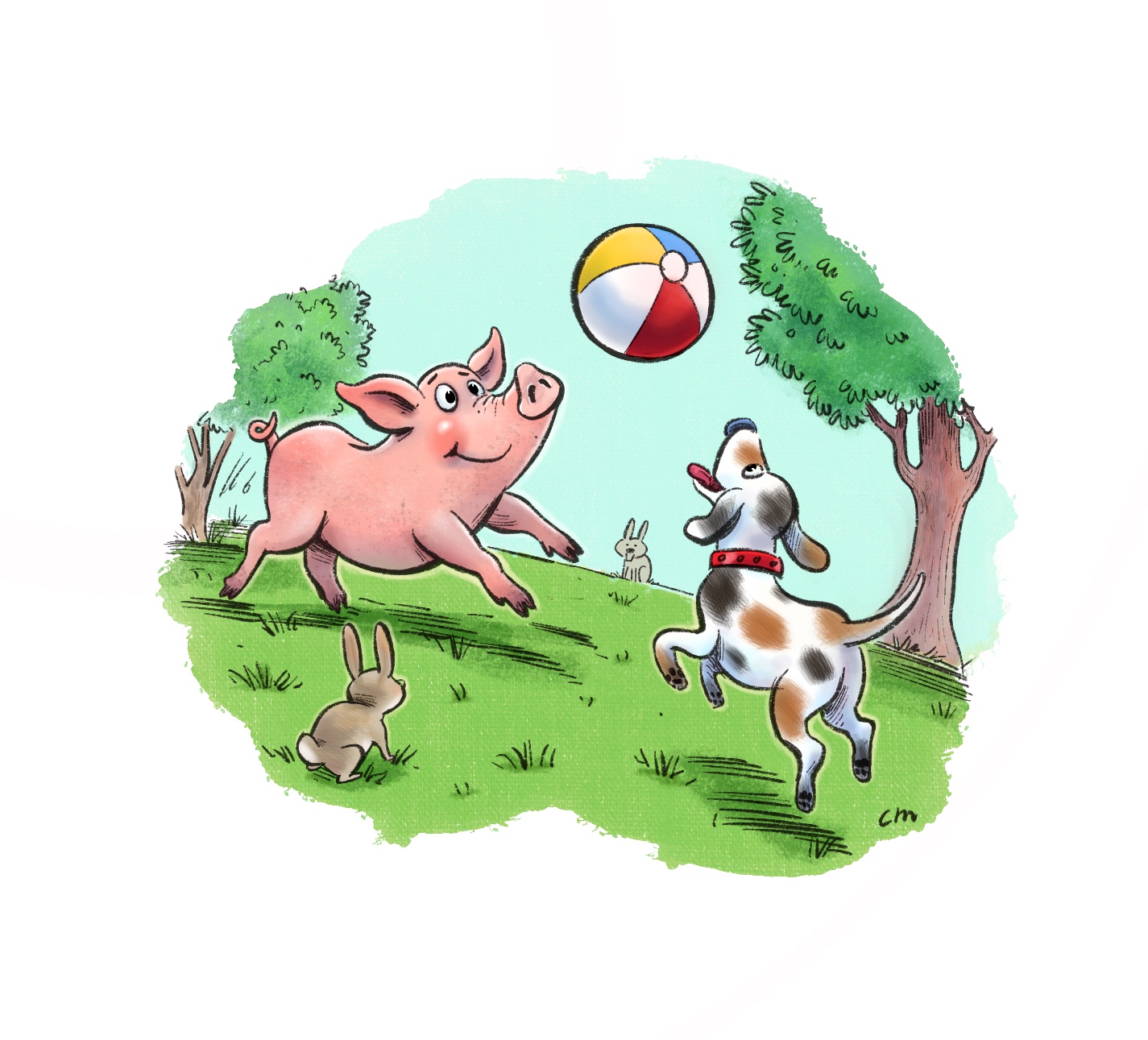 Pig intelligence extends to communication and memory, too. They can tell each other apart within their groups, communicate through different cues, and retain important information over long periods of time.
The research makes it clear that pigs’ capacity for learning and adapting puts them in the echelon of intelligent animals deserving of much more respect than they’re currently given.
How emotional and social are pigs?
You know when your friend’s excitement is contagious, or their sadness upsets you too? Pigs show that same kind of empathy with each other.
In a study on emotional intelligence, researchers trained one group of pigs to associate music with a positive outcome and another group to associate music with a negative outcome. When untrained pigs were introduced to the groups, they mirrored the emotions of the trained pigs — even though the new group didn’t know what the music meant. This shows that pigs are able to pick up on what their peers are feeling and match their energy.
Pigs also respond to human interactions with sensitivity — and in many cases, they perform even better than dogs. For instance, one study showed that pigs can differentiate between which object you’re asking them for. So if you tell a pig to go fetch a Frisbee or a ball, they’ll understand your instructions better than a dog would!
Pigs’ emotional intelligence goes hand in hand with their social skills. They form close-knit family groups in the wild, and they know exactly who’s who. Mother pigs stay close to their piglets until they grow up, and they enjoy snuggling up together and sleeping snout to snout. Sadly, their affectionate nature is stifled by the confinement they endure on factory farms, denying them the opportunity to express their social instincts.
Pigs feel the same emotions we’re all familiar with: pain, anxiety, sadness, stress, fear, loneliness. And because factory farms see them only as profit, these emotionally complex animals do nothing but suffer until they’re ultimately slaughtered.
The grim reality of factory-farmed pigs
Over 130 million pigs are killed each year in the US alone — that’s over 350,000 every day. The majority of them are confined to cramped indoor spaces and suffer extreme trauma.
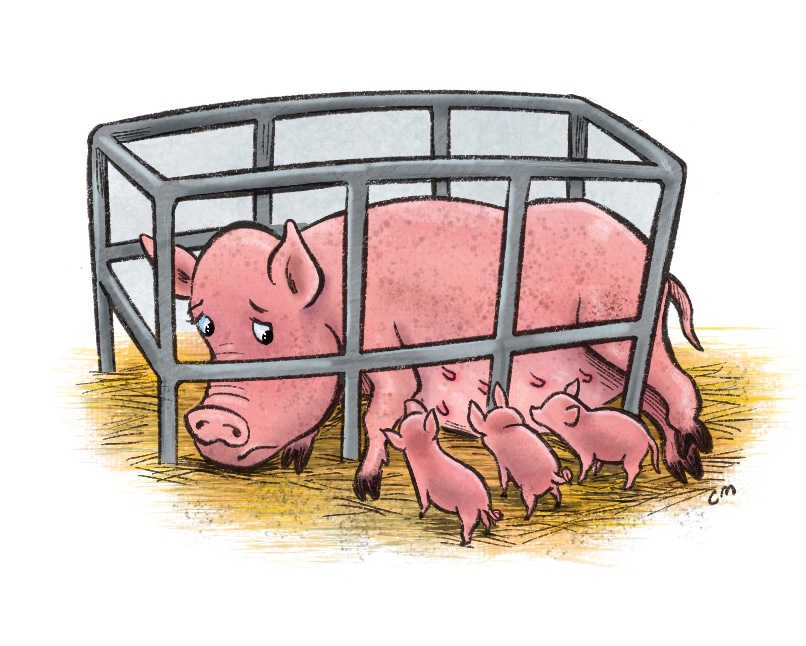
Pregnant pigs are kept in tight metal enclosures, preventing them from turning around or expressing their maternal instincts. Piglets are separated from their mothers shortly after birth, disrupting vital social bonds.
The stress of confinement takes a toll on these smart animals, just like it would with humans. Factory farming practices cause behavioral abnormalities and physical ailments — but instead of providing pigs with more humane conditions, farmers typically cut piglets’ tails and clip their teeth, without any painkillers.
Breeding sows are slaughtered after three to four years, while pigs being used for their flesh are usually slaughtered at just six to ten months old. In comparison, their natural life expectancy would’ve been around 20 years.
The meat paradox
Is it possible to care about animals and also eat meat? This cognitive dissonance is known as the “meat paradox.”
 We can’t deny what a powerful influence the meat industry has. Carnivorous diets are deeply entrenched and normalized in many cultures. According to the United Nations Food and Agriculture Organization, pork is the most widely consumed type of meat in the world. On average, Americans eat about 50 pounds per person every year — and in China, that number doubles.
Most of us don’t realize the mental gymnastics we’re doing every time we eat a sausage to avoid acknowledging where it came from. And since we call our meat by a different name than the animal, we’re able to distance ourselves further from the mental image of a slaughterhouse.
The reality is that many of us express concern for animal welfare while simultaneously supporting industries that subject them to cruelty. Even when we’re aware of what the mounting research says about the depths of pigs’ intelligence and emotional complexity, we might still have a hard time truly accepting it so we can continue justifying our eating habits.
Compassionate dietary choices are a win-win
It’s clear that pigs are not mere livestock; they’re deserving of our empathy and respect, just like dogs. Animal psychologists and researchers have been urging us for years to reevaluate our dietary choices and advocate for more ethical practices in food production.
Giving our money to the factory farming industry means supporting a system that puts millions of pigs through agony every day. Choosing plant-based foods not only prioritizes compassion for animals but also supports environmental sustainability and lowers your personal health risks.
We have the power to make more ethical choices about what ends up on our plates. And that doesn’t necessarily mean you have to jump right in with an all-or-nothing mindset. Even introducing a “Meatless Monday” to your weekly meal plan is a great first step to making a positive difference for animals, your health, and the environment.