

Care about your environment?
It’s time to stop eating meat.
When most of us think about environmental pollution, we conjure up images of factories churning out smog, gas-guzzling cars, or oil spills poisoning marine life. But did you know that animal agriculture is one of the biggest causes of pollution worldwide?
99% of animals that are raised for food in the United States are kept in abusive factory farms. Not only are the conditions unthinkably cruel, but the industry is the leading cause of deforestation, as well as a significant contributor to air and water pollution.
According to a recent analysis, plant-based diets lead to a 75% decrease in land use, greenhouse gas emissions, and water pollution compared to meat-heavy diets. Let’s take a closer look at how animal agriculture directly leads to environmental pollution, and discover the power we have as individuals to combat it.
“Livestock uses up 80% of all agricultural land, but only produces 18% of the world’s calories.”
Animal agriculture pollutes our air
Air pollution from animal agriculture is dangerous for both the planet and our health. Approximately seven million people die from air pollution exposure every year, making it the biggest environmental health risk worldwide. In the US alone, air pollution from farms causes nearly 18,000 deaths per year — and 80% of those are due to animal-based food production.
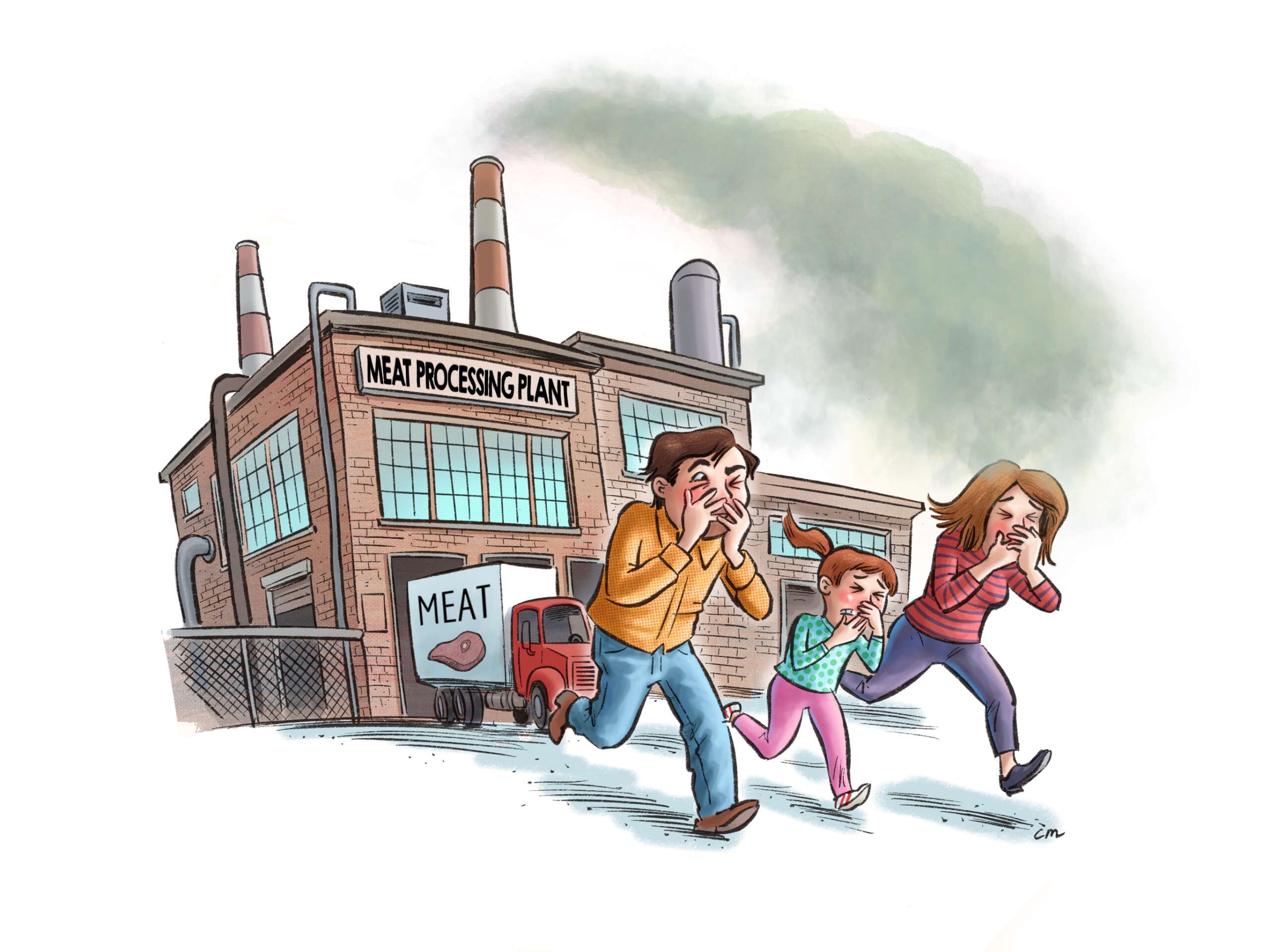
Facilities where animals are kept in confinement — commonly known as concentrated animal feeding operations, or CAFOs — emit pollutants that exacerbate respiratory diseases and degrade our air quality. CAFOs also emit greenhouse gases that are a major cause of climate change.
Ammonia emissions from animal agriculture are particularly deadly, contributing to over 12,000 deaths annually in the US. These emissions disproportionately affect high-poverty and primarily non-white communities, highlighting an environmental justice issue. As Earth’s temperature continues to rise, air pollution will increasingly harm every region and demographic.
CAFOs also produce an insidious pollutant called particulate matter 2.5. These tiny particles easily lodge in our lungs and bloodstream, which can cause asthma and respiratory problems. Over time, this exposure increases the risk of heart disease, cancer, and stroke.
The rate of air pollution deaths associated with a serving of red meat is at least 15 times as high as that of all fruits and vegetables. Despite the obvious and severe health risks, agricultural emissions are less regulated than those from power plants, factories, and vehicles — even though they cause more deaths than pollution from coal power plants.
Livestock production contaminates our water and destroys marine life
It’s easy to assume that the way we handle land animals has nothing to do with water pollution, but science has shown that there’s a clear and direct relationship.
First, the greenhouse gases emitted by industrial animal agriculture not only intensify global warming but also disrupt marine life by altering the pH balance of ocean waters, known as ocean acidification.
Second, the production of meat and other animal products generates vast amounts of waste and requires heavy use of fertilizers and pesticides. All of that runoff from livestock farms contaminates our freshwater sources, pollutes our oceans, and wreaks havoc on crucial aquatic ecosystems.
The nutrient pollution from animal agriculture creates harmful algal blooms in a process called eutrophication. It results in ocean dead zones — areas where oxygen levels are too low for most marine life to survive. This negatively impacts fishing industries, coastal communities, and biodiversity.
Animal agriculture puts biodiversity in critical danger
The expansion of animal agriculture, particularly beef production, is a major threat to biodiversity — not just in the ocean, but also on land.
This global crisis is driven by habitat destruction, overexploitation of natural resources, and pollution. Animal agriculture is the single biggest driver of habitat loss, threatening the survival of species worldwide. If we continue with our current levels of meat consumption, more than 17,000 species’ habitats will be threatened by 2050.
When natural habitats are converted into agricultural land for livestock farming and crops for animal feed, it severely disrupts ecosystems. Meat production is the leading cause of deforestation globally, and habitat loss is a direct consequence. Farmers in South America purposely set forest fires to clear space for cattle, putting short-term profit from meat over the sustainability of our planet.
Despite the industry using up 80% of all agricultural land, livestock only produces 18% of the world’s calories.
What actions can I take to help protect the environment?
As consumers, we play a crucial role in reducing environmental pollution through what we put on our plates. The latest research shows that plant-based diets result in 75% less water pollution, land use, and greenhouse gas emissions than diets that include daily servings of meat. Forgoing animal products also reduces water use by 54% and the destruction of wildlife by 66%.
If you’re not ready to go cold turkey just yet, consider adopting a “flexitarian” diet, where at least half of your calories come from fruits and vegetables, and animal protein is limited to a couple of meals per week. If Americans switched to this kind of diet, we could decrease air pollution mortality from agriculture by 68%.
Transitioning to plant-based eating is the simplest and most effective way to reduce greenhouse gas emissions, promote cleaner air and water, halt deforestation, and preserve biodiversity. A widespread dietary shift could also prevent hundreds of thousands of premature deaths; one study estimates that it would reduce global mortality by 6 to 10%.
You have the power to create a healthier future for both yourself and the planet.